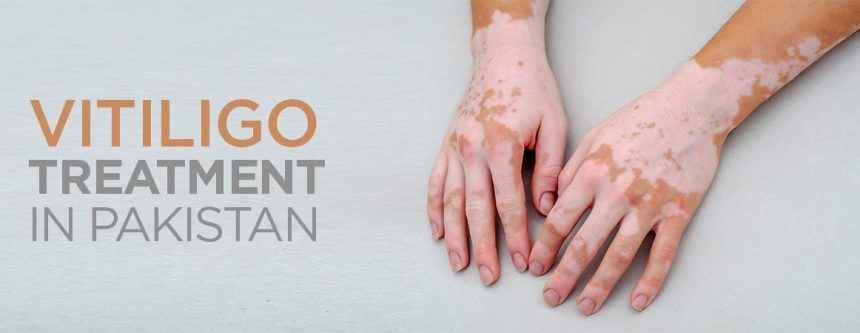
Most people notice it suddenly. A small white mark around the knuckles or near the lips or perhaps on the neck. Initially, it may appear unimportant — it may resolve on its own. Then, it spreads or a friend mentions it and there’s a wave of anxiety and a hundred questions with little clarity of answers.
Vitiligo is not as rare as it seems. It is equally distributed amongst all ethnic groups, age groups and skin types. Yet it remains one of the most misunderstood conditions in the world of Skin Diseases Treatment — and that misunderstanding leads a lot of people toward either unnecessary panic or complete neglect. Neither is helpful.
First, Understanding What’s Actually Going On
Vitiligo isn’t a surface problem. It doesn’t result from something that someone ate or touched or did wrong. The immune system starts to assault melanocytes, cells that create skin colour. Damage to those cells or elimination of them causes the skin in that region to lose its colour, rendering it white or pale.
It’s autoimmune. It’s not contagious. And it’s definitely not something a person should feel embarrassed about — though, understandably, many do. Knowing the root cause matters because it shapes how Vitiligo Treatment actually works. You can’t just treat the surface and expect lasting results.
Creams and Topical Treatments — Where Most People Start
For a lot of patients, the first thing a dermatologist recommends is a topical treatment, and that makes sense. Corticosteroid creams have been around for a long time and still work reasonably well for smaller patches, especially when vitiligo is caught in the early stages. They help encourage the skin to produce pigment again, though long-term use can cause skin thinning — which is why doctors don’t usually recommend them indefinitely.
More up to date are calcineurin inhibitors, such as creams of Tacrolimus or Pimecrolimus. They are less harsh on the skin and are ideal for the face for those who are most concerned with skin patches. They’re a solid option and increasingly preferred by dermatologists for sensitive areas.
Light Therapy — Probably the Most Talked About Treatment Right Now
In the last 10 years, narrowband UVB phototherapy has genuinely changed the treatment of Vitiligo. It is a procedure that includes exposing the afflicted skin to regulated (non-burning) wavelengths of UV light, prompting the remaining melanocytes to begin generating pigment once again. Sessions normally take place two or three times a week, and the results (when they occur) may be tremendous.
It takes time. That’s the honest part most people need to hear upfront. Visible improvement often doesn’t show up for a few months. But for anyone seriously researching Skin Diseases Treatment options, light therapy is one of the most evidence-backed approaches available without going down a surgical route.
Surgery — When Other Options Haven’t Done Enough
For patients whose vitiligo has been stable for over a year and hasn’t reacted favourably to treatments or light therapy, surgery becomes a viable topic. Melanocyte transplantation entails extracting pigment-producing cells from healthy parts of the skin and putting them into the afflicted spots. Skin grafting works on a similar principle.
Results can look genuinely impressive — but not everyone qualifies. A comprehensive review by an experienced expert is needed before any surgical method is explored.
The Emotional Side Nobody Talks About Enough
Here’s the thing about vitiligo that clinical articles tend to gloss over — it affects how people feel about themselves, sometimes deeply. Social anxiety, avoiding certain clothes, skipping social situations — these are real and valid responses to something that changes how someone looks and how others react to them.
Sun protection also matters practically. Depigmented skin has little natural resistance against UV radiation and burns fast. Daily broad-spectrum sunscreen isn’t optional – it’s actually important.
One Last Thing
There is no one treatment that fits all. Treatment for Skin Diseases is always best when a treatment plan is tailored to the person, their skin type, the lifestyle and the extent of the disease. Vitiligo is manageable, and with the right specialist and a little patience, real improvement is possible for most people.