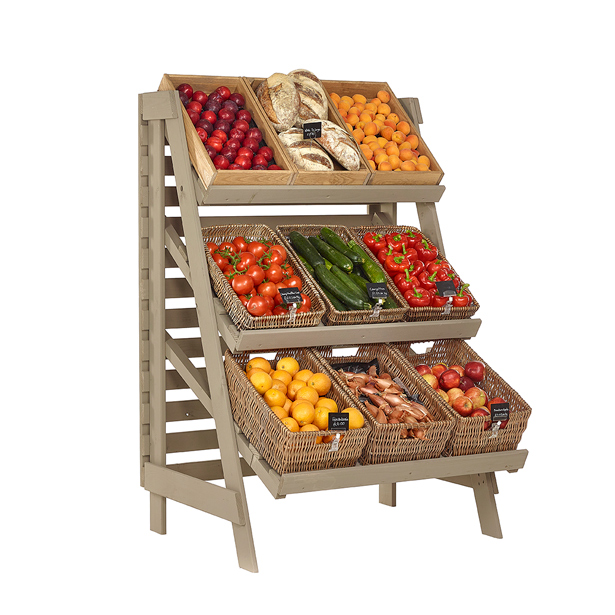
Fresh vegetable displays influence how customers browse products and move through a retail space. Crowded containers, poorly positioned shelves, and unsuitable storage structures can make produce difficult to organize and maintain. Choosing an outdoor vegetable display rack helps retailers create practical produce sections that support visibility, convenient handling, and efficient restocking.
For grocery stores, vegetable vendors, supermarkets, and open-air markets, the right display rack should match available space, produce volume, and daily operating requirements.
Why an Outdoor Vegetable Display Rack Matters for Retail Stores
An outdoor vegetable display rack provides a dedicated structure for arranging and presenting fresh produce.
Unlike placing vegetables directly in loose crates or on the ground, a properly designed rack creates clearly defined display areas and improves access for customers.
The rack can also help retailers separate produce varieties, manage stock rotation, and maintain a more organized selling environment.
Its effectiveness depends on selecting a design that accommodates both customer shopping patterns and employee handling needs.
Factors to Consider When Buying an Outdoor Vegetable Display Rack
Choosing a display rack requires evaluating practical requirements rather than appearance alone.
Available Display Space
Measure the area where the rack will be installed, including its width, depth, and available height.
Retailers should allow enough space for customers to move comfortably and for employees to refill produce without blocking walkways.
Type and Quantity of Vegetables
Different vegetables require different display conditions.
Potatoes and onions may be suitable for sturdy bins or crates, while delicate tomatoes and leafy vegetables require more careful placement and handling.
Rack Material
The material should support regular cleaning and withstand the conditions of the intended location.
Stainless steel, powder-coated metal, and suitable mixed-material designs are common options. Outdoor installations require additional attention to corrosion resistance and weather exposure.
Weight Capacity
The rack must support the combined weight of vegetables, containers, and accessories.
Businesses should confirm the load capacity of individual shelves rather than relying only on the rack’s overall dimensions.
Display Flexibility
Adjustable shelves, removable trays, and modular components can help retailers accommodate changing produce quantities.
Flexible layouts are particularly useful for businesses with seasonal product variations.
Outdoor Vegetable Display Rack Designs for Different Store Sizes
The appropriate rack configuration often depends on the retailer’s available space and customer volume.
Compact Vegetable Shops
Smaller shops can benefit from wall-oriented or narrow multi-tier racks.
These designs increase vertical display capacity while preserving space for customer movement.
Roadside Vegetable Vendors
Roadside sellers may prefer portable or modular display stands that can be assembled, moved, or stored as needed.
Stability and weather suitability are important when racks are used on uneven outdoor surfaces.
Large Grocery Stores
Larger stores may use a combination of wall displays and freestanding island racks.
This arrangement allows retailers to separate vegetable categories while providing access from different directions.
Farmers’ Markets
Temporary market stalls often require displays that are easy to transport and arrange.
Portable racks with removable containers can help vendors adapt to different stall layouts and changing inventory.
Comparing Outdoor Vegetable Display Rack Options
Different display designs offer advantages based on retail requirements.
| Rack Design | Main Advantage | Suitable Application |
| Multi-Tier Rack | Uses vertical space efficiently | Compact vegetable shops |
| Slanted Display Rack | Improves produce visibility | Grocery stores and markets |
| Portable Display Stand | Supports flexible positioning | Temporary stalls and markets |
| Island Display Rack | Allows access from multiple sides | Larger retail spaces |
| Stainless Steel Rack | Provides a durable, cleanable structure | High-use produce sections |
The best design depends on product variety, available floor space, and the handling requirements of the business.
How an Outdoor Vegetable Display Rack Supports Retail Efficiency
A suitable display rack can improve several aspects of daily produce management.
Faster Product Restocking
Organized shelves and separate compartments make it easier for employees to identify products that require replenishment.
This reduces unnecessary handling and keeps displays orderly throughout the day.
Better Inventory Visibility
Clearly separated produce categories help employees monitor stock quantities.
Retailers can identify slow-moving products and replenish popular vegetables more efficiently.
Improved Customer Movement
Thoughtful rack placement can create accessible shopping paths.
Customers can browse vegetables without unnecessary crowding when sufficient space is maintained around displays.
Reduced Product Handling
Appropriately arranged displays allow customers to view and select produce without moving large quantities of other vegetables.
This can help limit avoidable handling damage, particularly for delicate items.
How to Plan an Efficient Outdoor Vegetable Display Layout
A practical display layout should consider visibility, product placement, and customer access.
Position Frequently Purchased Vegetables Conveniently
Common products such as potatoes, onions, and tomatoes should be placed where customers can easily reach them.
Retailers can arrange related items nearby to simplify shopping.
Separate Delicate and Heavy Produce
Heavy vegetables should not be stacked directly on delicate products.
Separate shelves or containers help maintain product condition and reduce crushing.
Use Clear Product Dividers
Dividers help prevent different vegetables from mixing during busy shopping periods.
They also make displays easier to replenish and maintain.
Provide Adequate Shade
Outdoor vegetables can deteriorate when exposed to excessive sunlight and heat.
Racks should be positioned in suitable shaded or protected areas, with additional produce storage conditions determined by the needs of each product.
Maintain Accessible Shelf Heights
Frequently purchased products should be displayed at comfortable reaching heights.
Avoid positioning heavy containers where employees or customers must lift them awkwardly.
Understanding Outdoor Vegetable Display Rack Costs
The price of an outdoor vegetable display rack depends on its construction, size, materials, and available features.
Material and Finish
Stainless steel and reinforced metal structures may involve different manufacturing costs than simpler rack designs.
Weather-resistant finishes and specialized components can also influence pricing.
Number of Shelves and Compartments
Larger racks with additional shelves, dividers, or containers generally require more materials.
Businesses should select sufficient capacity without purchasing more display space than necessary.
Customization
Custom dimensions, adjustable configurations, and specialized accessories can affect manufacturing expenses.
Retailers should evaluate whether standard designs adequately meet their requirements before considering customized options.
Transportation and Installation
Delivery distance, rack dimensions, assembly requirements, and installation arrangements can influence total costs.
Businesses should include these expenses when comparing different display options.
How to Extend the Life of an Outdoor Vegetable Display Rack
Proper maintenance helps reduce replacement costs and preserve rack functionality.
Retailers should clean racks regularly, remove accumulated dirt, and check for damaged shelves or loose connections. Cleaning products should be appropriate for the rack material and food-contact surfaces.
Outdoor installations should be monitored for rust, moisture damage, and general wear. Protective placement can help reduce exposure to harsh conditions.
Avoiding excessive loads and maintaining stable rack positioning also helps prevent structural problems.
Conclusion
An outdoor vegetable display rack is an important part of organizing fresh produce in grocery stores, vegetable shops, and open-air markets. The right design improves product accessibility, supports efficient restocking, and makes better use of available retail space.
Retailers should consider rack dimensions, materials, weight capacity, and display flexibility before purchasing. Proper placement, cleaning, and maintenance help create an organized produce section that remains practical for daily business operations.