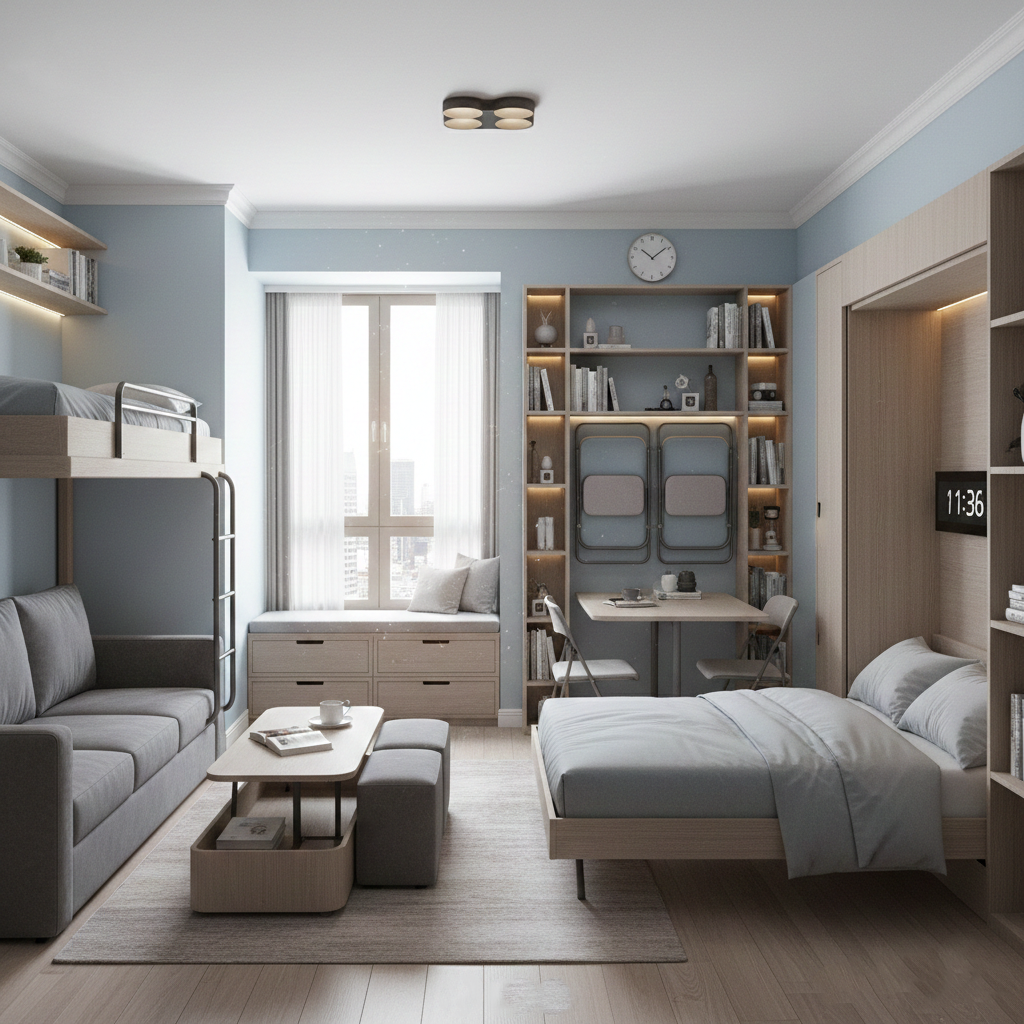
Living in a compact home comes with its own set of everyday challenges. There is often enough space to live comfortably, but not enough to be careless with how it is used. Furniture placement matters more. Storage decisions matter more. Even small choices, like where a chair goes, how a table opens, or where stools can be tucked away, can change how the entire room feels.
In smaller homes, space does not fail because it is limited. It fails when it is not used thoughtfully. A room can feel crowded not because it holds too much furniture, but because the furniture does not work together. This is why smart furniture choices and practical layouts make a noticeable difference. When each piece earns its place, small spaces begin to feel easier to live in.
The goal is not to fill every corner. It is to allow the room to function without constant adjustment. Space saving furniture helps do that by supporting daily life while taking up as little visual and physical room as possible.
Multi Functional Furniture for Maximum Efficiency
In compact homes, furniture that serves only one purpose often creates problems. A sofa that cannot be used beyond seating or a table that stays fixed regardless of need limits how the room can adapt. Multi functional furniture helps solve this by allowing one piece to handle more than one task.
Sofas that convert into beds are a common example. In homes without a guest room, this single piece removes the need for extra sleeping furniture. When not in use as a bed, it functions like any regular sofa. Storage built into these sofas further reduces the need for additional cabinets or boxes.
Extendable dining tables are another useful option for modern homes, especially when space is shared between the living room and kitchen. A compact dining table set works well for everyday use and can be expanded only when required, allowing the area to stay open and flexible. This approach suits homes where the dining space needs to adapt to different occasions without feeling crowded. Storage ottomans also serve multiple roles. They can be used for seating, as a footrest, or as a surface, while storing items inside to keep the space organized and clutter-free.
The key is that these pieces do not demand extra space to perform their second function. They simply adapt when needed, helping rooms stay organised without feeling crowded.
Modular and Stackable Solutions
One of the biggest advantages in small homes is flexibility. Furniture that can be rearranged or adjusted over time reduces the need to replace pieces as needs change. Modular and stackable furniture fits well into this idea.
Modular shelving allows homeowners to decide how much storage they need and where. Shelves can be added when storage requirements increase or reduced when space needs to open up. This is especially helpful in homes where work, study, and leisure share the same room.
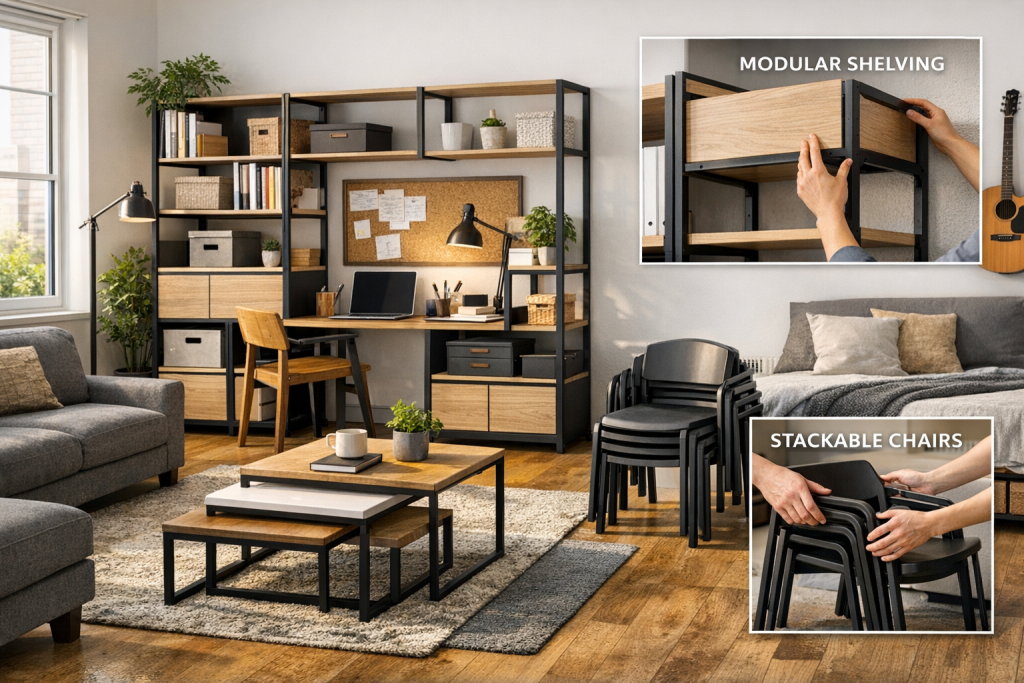
Stackable chairs are practical in homes that host guests occasionally. They can be stored away neatly when not in use and brought out when needed. Nesting tables work similarly. They offer multiple surfaces without permanently occupying floor space.
Furniture that grows or shrinks with the space helps small homes stay usable in the long run. Instead of forcing the room to adapt to fixed furniture, the furniture adapts to the room.
Vertical Storage and Wall Mounted Furniture
When floor space is limited, vertical space becomes valuable. Many compact homes do not fully use their walls, leaving potential storage unused. Wall mounted furniture helps change this.
Wall mounted shelves keep items accessible without taking up floor space. They work well above sofas, desks, or beds. Foldable desks attached to the wall are useful for homes where a full time work desk is not possible. When folded away, the room returns to its original function.
Floating cabinets and wall mounted units help store items while keeping the floor clear. This makes rooms easier to clean and visually less heavy. Tall book shelf also take advantage of vertical space, offering storage without spreading outward.
Vertical storage works best when it supports the layout rather than overwhelming it. When placed thoughtfully, it complements seating and tables instead of competing with them.
Smart Décor and Accessories for Small Rooms
Furniture alone does not determine how a small room feels. Décor and accessories play a quiet but important role. In compact spaces, these elements should support the sense of openness rather than fight it.
Mirrors help reflect light and make rooms feel less enclosed. Light coloured rugs define areas without visually shrinking the space. Compact side tables provide surface area without taking over the room.
Decorative items that also offer storage are especially useful. Boxes, baskets, or trays keep items organised while remaining part of the room’s look. Hidden storage within décor helps maintain order without adding bulk.
The aim is not to decorate less, but to decorate with intention. Each piece should have a reason to be there.
Conclusion
Compact living does not require compromise. With the right furniture and layout, small spaces can feel comfortable and functional. Space saving furniture allows rooms to support daily life without feeling restricted.
By using multi functional pieces, modular solutions, vertical storage, and thoughtful décor, homeowners can make the most of every inch. The result is a home that feels balanced and easy to live in.
Small spaces work best when furniture works harder. When chosen carefully, even the most compact rooms can feel complete without feeling full.