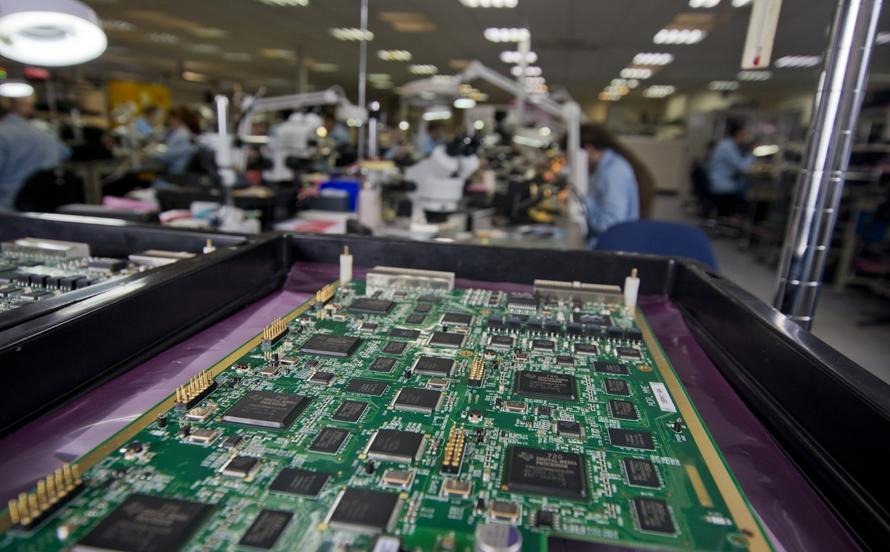
As modern electronic systems continue to demand greater power efficiency, higher current capacity, and improved thermal management, printed circuit board technology has evolved to meet these increasingly challenging requirements. Industries such as electric vehicles, renewable energy, industrial automation, telecommunications, aerospace, and power electronics rely on circuit boards that can safely handle high voltages and heavy electrical loads without compromising performance. This has made the Power PCB an essential component in today’s high-power electronic applications.
Unlike standard printed circuit boards designed primarily for signal transmission, a Power PCB is engineered to carry high current while efficiently dissipating heat generated during operation. Its design incorporates wider copper traces, thicker copper layers, optimized thermal paths, and robust materials that ensure reliable performance even in demanding environments. Whether used in motor controllers, power supplies, battery management systems, or industrial equipment, a well-designed Power PCB improves system efficiency and extends product lifespan.
Manufacturing these specialized circuit boards requires advanced engineering expertise, precision fabrication, and rigorous quality control. Partnering with an experienced Power PCB manufacturer helps businesses achieve reliable performance, reduce production risks, and ensure compliance with industry standards.
This article explores the design, manufacturing process, advantages, applications, and key considerations when selecting a trusted Power PCB manufacturer.
What Is a Power PCB?
A Power PCB is a printed circuit board specifically designed to manage high electrical currents and voltages while maintaining stable thermal and electrical performance. Compared to conventional PCBs, power PCBs feature thicker copper layers, reinforced conductor traces, and carefully engineered layouts that minimize electrical resistance and heat buildup.
These circuit boards are commonly manufactured using FR-4, metal-core materials, insulated metal substrates (IMS), ceramic substrates, or heavy copper laminates depending on the application’s power requirements. The material selection plays a critical role in ensuring efficient heat dissipation and long-term reliability.
Power PCBs are designed to support components such as power transistors, MOSFETs, IGBTs, transformers, inductors, rectifiers, and high-current connectors. Their construction enables electronic systems to operate safely under continuous heavy loads while minimizing power loss and temperature rise.
Why Power PCBs Are Important
As electronic equipment becomes more powerful, managing electrical current and heat has become one of the most important aspects of PCB design. Standard circuit boards may experience excessive temperature rise, voltage drop, or conductor failure when exposed to high-current applications.
A Power PCB addresses these challenges by using thicker copper conductors that reduce electrical resistance and improve current-carrying capacity. Wider trace widths further distribute current efficiently, lowering heat generation and minimizing energy loss.
Thermal management is equally important. Effective heat dissipation prevents sensitive components from overheating, improving system stability and extending operational life. Carefully designed ground planes, thermal vias, and heat-spreading copper areas help maintain safe operating temperatures even under continuous heavy loads.
These characteristics make power PCBs indispensable for modern high-performance electronic systems where efficiency, safety, and reliability are critical.
The Power PCB Manufacturing Process
Manufacturing a Power PCB begins with a comprehensive Design for Manufacturability (DFM) review. Engineers evaluate copper thickness, trace widths, thermal requirements, board materials, layer stack-up, and component placement to ensure the design can safely support the intended electrical load.
The fabrication process starts by transferring circuit patterns onto copper-clad laminate using precision photolithography. Chemical etching removes unwanted copper while preserving heavy-current conductor paths designed for the application.
For multilayer power PCBs, multiple copper and dielectric layers are carefully aligned and laminated under controlled pressure and temperature. Precision drilling creates vias and mounting holes, while copper plating establishes reliable electrical connections between layers.
Following drilling and plating, solder mask is applied to protect exposed circuitry, and surface finishes improve solderability and corrosion resistance. The completed boards then undergo automated optical inspection, electrical testing, and thermal performance verification before shipment.
Throughout production, manufacturers maintain strict process control because heavy copper circuits require precise fabrication to ensure long-term electrical reliability.
Advantages of Power PCB Technology
One of the greatest advantages of a Power PCB is its ability to safely carry high electrical currents without excessive voltage loss. Thick copper conductors reduce resistance, allowing efficient power transmission throughout the circuit.
Improved thermal performance is another major benefit. Carefully designed heat dissipation structures prevent overheating, helping electronic components maintain stable operation under demanding conditions.
Power PCBs also offer greater mechanical durability. Their reinforced construction enables them to withstand thermal cycling, vibration, and harsh operating environments commonly encountered in industrial and automotive applications.
Optimized power distribution further improves electrical efficiency by reducing energy loss and maintaining stable voltage delivery to critical components.
Because of these advantages, power PCBs provide long-term reliability while supporting increasingly sophisticated power electronic systems.
Applications of Power PCBs
Power PCBs are widely used across industries where efficient power handling and thermal management are essential. Electric vehicles depend on power PCBs for battery management systems, onboard chargers, motor controllers, inverters, and power distribution modules.
Renewable energy systems utilize power circuit boards in solar inverters, wind turbine controllers, battery storage equipment, and energy conversion systems where high efficiency is critical.
Industrial automation equipment relies on Power PCBs in motor drives, programmable logic controllers, robotics, welding equipment, and factory automation systems operating under continuous heavy loads.
Telecommunications infrastructure incorporates power PCBs within power supply units, network equipment, communication base stations, and backup power systems that require reliable electrical performance.
Medical equipment, aerospace electronics, railway systems, charging stations, uninterruptible power supplies, and industrial power converters also benefit from the durability and thermal efficiency of power PCB technology.
Why Choosing an Experienced Power PCB Manufacturer Matters
Producing high-quality power circuit boards requires specialized manufacturing expertise that extends beyond conventional PCB fabrication. An experienced Power PCB manufacturer understands the challenges associated with heavy copper processing, thermal management, material selection, and high-current circuit design.
Professional manufacturers work closely with customers during product development by performing Design for Manufacturability analysis to optimize conductor geometry, copper thickness, thermal pathways, and manufacturing efficiency before production begins.
Modern manufacturing facilities equipped with heavy copper processing equipment, automated optical inspection systems, precision drilling technology, electrical testing equipment, and intelligent manufacturing systems ensure consistent quality from prototype development through large-scale production.
Working with an experienced manufacturer reduces production risks while improving reliability, manufacturing yield, and long-term product performance.
Quality Assurance in Power PCB Manufacturing
Quality assurance is essential because Power PCBs operate under demanding electrical and thermal conditions. Manufacturers inspect incoming materials before monitoring every stage of fabrication for dimensional accuracy and process consistency.
Automated Optical Inspection identifies circuit defects, while X-ray inspection verifies internal structures and plated vias within multilayer designs.
Electrical testing confirms circuit continuity, insulation resistance, and current-carrying capability. Thermal testing evaluates heat dissipation performance under realistic operating conditions, ensuring the board can safely support its intended electrical load.
Additional reliability testing often includes thermal cycling, solderability verification, mechanical stress analysis, and environmental testing to confirm long-term durability.
Leading manufacturers maintain internationally recognized certifications such as ISO 9001, IPC standards, UL certification, IATF 16949 for automotive electronics, ISO 13485 for medical devices, and RoHS compliance, demonstrating their commitment to quality manufacturing.
Future Trends in Power PCB Technology
As industries continue adopting electric vehicles, renewable energy systems, artificial intelligence, industrial automation, and advanced power electronics, the demand for high-performance Power PCBs will continue to grow. Manufacturers are investing in heavy copper technology, advanced thermal management materials, embedded cooling solutions, and intelligent manufacturing systems to support next-generation applications.
Improved substrate materials, higher current densities, compact power module designs, and automated quality inspection technologies are enabling Power PCBs to handle increasingly demanding operating conditions while maintaining exceptional reliability.
These innovations will continue driving the evolution of efficient, high-power electronic systems across numerous industries.
Conclusion
The Power PCB has become a critical component in modern electronic systems that require efficient power distribution, high current capacity, and superior thermal management. Its specialized design enables reliable operation in demanding applications ranging from electric vehicles and renewable energy to industrial automation and telecommunications.
Choosing an experienced Power PCB manufacturer provides access to advanced engineering expertise, precision manufacturing technologies, and comprehensive quality assurance. As high-power electronic systems continue to evolve, professionally manufactured Power PCBs will remain essential for delivering safe, efficient, and reliable performance across the global electronics industry.