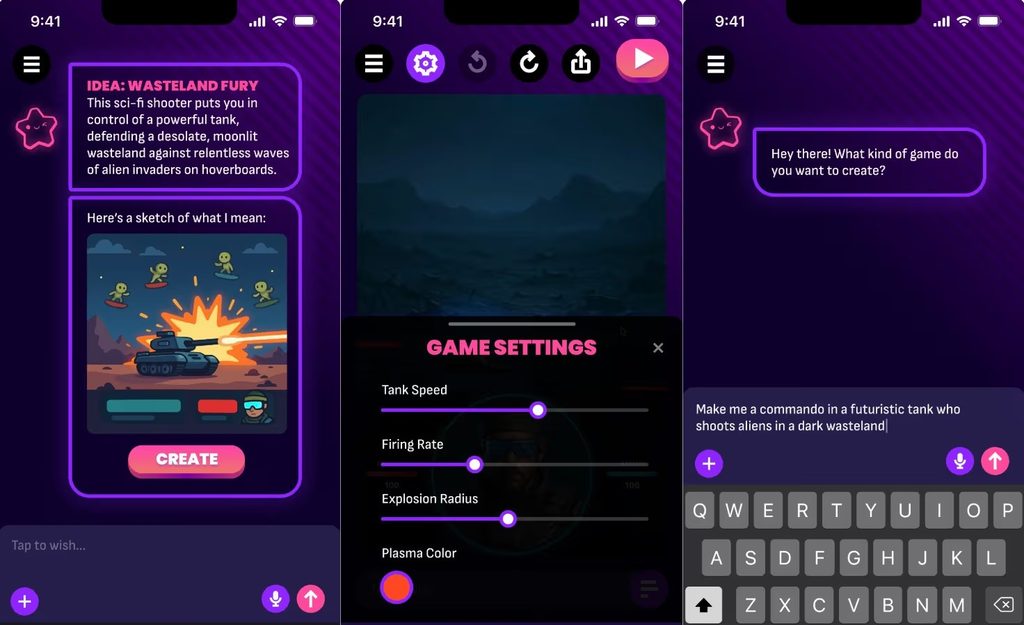
AI games are moving beyond simple computer-controlled enemies and predictable dialogue. Players are beginning to see experiences with unusual characters, unexpected conversations, strange world changes, personalised suggestions, and challenges that do not always unfold in exactly the same way.
That unpredictability is part of the appeal.
Traditional games are carefully designed around known outcomes. Developers decide what characters say, how enemies react, and what happens when players make certain choices. AI-powered systems can make these interactions feel less controlled, which sometimes creates moments that are funny, confusing, surprising, or completely strange.
The result is not always perfect. Some AI features feel unnecessary or unfinished. Others create genuinely new ways to interact with a game.
The important question is not whether a game uses AI. It is whether the technology makes the experience more interesting, responsive, and enjoyable for the player.
What makes an AI game different?
The phrase AI games can describe several different types of experiences. Not every game using artificial intelligence offers the same thing to players.
AI may be used for:
- Smarter enemy behaviour.
- More natural character conversations.
- Personalised recommendations.
- Dynamic quests or challenges.
- Procedurally changing environments.
- Voice interaction.
- Adaptive difficulty.
- AI-controlled companions.
- Player-created images or objects.
- New gameplay ideas generated from player actions.
Some games use AI behind the scenes to improve development, testing, animation, or performance. Players may never notice that use.
Other games place AI directly inside the experience. In those cases, the player may interact with characters, worlds, or systems that respond differently depending on what happens during play.
That second category is where things start to feel unusual.
Why AI-powered experiences can feel strange
Human designers usually create within a set of familiar patterns. They know what a character should say, how a story should progress, and what kind of reaction feels believable.
AI systems can produce combinations that are technically possible but emotionally unexpected. A character may respond too literally, misunderstand a situation, or say something that feels unintentionally funny.
That can be frustrating in a serious story, but it can also be entertaining in a playful or experimental game.
The strange moments may include:
- An NPC remembering something in an unexpected way.
- A character interpreting a player’s action incorrectly.
- A world changing after an unusual decision.
- A generated challenge that feels different from the previous one.
- A virtual companion developing an unusual personality.
- A game responding to a phrase the designer did not specifically script.
- A harmless mistake turning into a memorable situation.
These moments are valuable because they create stories that players want to share. You may forget a normal mission, but you are more likely to remember the character who gave an absurd answer or the world that behaved in a completely unexpected way.
AI is becoming more visible to players
AI in gaming is no longer limited to development tools. Some companies are testing player-facing assistants and systems designed to help players during or around gameplay.
Xbox announced Gaming Copilot as an AI-powered gaming companion that can provide recommendations, help players understand what is happening on screen, and use information such as achievements or play history to offer more personalized assistance.
Microsoft Research has also presented Muse, a generative model trained to understand elements such as a 3D game world, physics, and player controller actions. The research explores how AI could support new gameplay ideas and help produce consistent interactive experiences.
These projects do not mean every current game has an AI-generated world. They show that the relationship between players and game systems is expanding. Instead of only following prewritten rules, future experiences may respond more directly to what players say and do.
The difference between useful AI and a marketing label
A game can mention AI in its description without offering a meaningful AI-powered experience. The technology may be used for background development, content testing, or a small feature that has little effect on play.
For players, the useful question is:
What does the AI actually change?
A meaningful feature should affect the experience in a way you can notice. It might make characters more responsive, generate different situations, adapt the difficulty, or give you more freedom to experiment.
A weak feature may only add novelty to the description. It may produce repetitive results, interrupt the experience, or create content that feels less polished than traditional design.
AI should support the gameplay, not distract from it.
Why unpredictability can make games more replayable
A fixed game can become predictable once you understand all of its patterns. You know where an enemy appears, which dialogue option leads to a reward, and what happens after completing a specific task.
AI systems can introduce variation. Even small changes may make the next session feel less familiar.
Replay value can come from:
- Different character reactions.
- Changing objectives.
- New combinations of events.
- Adaptive opponents.
- Personalised challenges.
- Unexpected discoveries.
- Multiple solutions to the same problem.
This does not mean AI should make every result random. Completely unpredictable systems can become frustrating because players cannot learn from their mistakes.
The strongest experiences combine variation with stable rules. Players should still understand the goal, the controls, and the consequences of their decisions. The AI can change the details without destroying the structure.
Weird does not automatically mean good
Unusual gameplay can be exciting, but strange features need a purpose.
A game may feel weird because it offers a fresh idea, or it may feel weird because the system is broken. Players can usually tell the difference after a few sessions.
Good weirdness:
- Creates new possibilities.
- Encourages experimentation.
- Produces memorable moments.
- Gives players meaningful choices.
- Supports the game’s tone.
- Adds variety without removing fairness.
Bad weirdness:
- Makes objectives unclear.
- Produces repetitive or meaningless responses.
- Breaks the story.
- Removes player control.
- Creates unfair difficulty.
- Uses personal information without clear consent.
- Feels like a shortcut around thoughtful design.
The goal is not to make games random for the sake of being random. The goal is to make the player feel that the world is capable of surprising them.
A calm creative baking experience
On Astrocade, Cupcake Studio is a cozy baking simulator where players design and make their ideal cupcake from scratch. The experience focuses on tactile controls, detailed animations, and a calm creative rhythm rather than competition or intense challenges. Each step of the baking process is presented as a satisfying activity, allowing players to focus on decoration, presentation, and personal preference. The cozy format makes it suitable for players who want a relaxing break from action-heavy Online Games. The supplied summary describes a handcrafted baking simulator and does not confirm AI features, AI-generated content, multiplayer options, or no-download access, so it should not be labelled as an AI-powered game without separate confirmation.
Why players are curious about AI games
Curiosity is one of the strongest reasons people try new technology. Players want to see what happens when a character responds to an unusual question or when a game changes based on their decisions.
This is different from traditional progression. In a standard game, players return to unlock a known reward. In an AI-driven experience, they may return because they want to test a new possibility.
They may wonder:
- What will the character say this time?
- Will the world react differently?
- Can I solve the challenge in another way?
- Will the system remember my previous choice?
- Can I surprise the game?
- What happens if I ignore the obvious objective?
These questions turn the player into an active experimenter. The game becomes less like a fixed sequence and more like a space for testing ideas.
Why creativity matters more than technical novelty
AI alone does not make a game enjoyable. The best player experiences still need clear goals, responsive controls, good pacing, and meaningful feedback.
A technically impressive system can feel empty if players do not know why they should interact with it. On the other hand, a simple AI feature can be highly effective when it supports a strong gameplay loop.
Creative design asks:
- What can the player do?
- Why does that action matter?
- How does the world respond?
- What changes after the response?
- Can the player learn from the result?
- Is the outcome entertaining or meaningful?
These questions matter more than the size of the AI model or the complexity of the underlying technology.
AI games and player trust
The stranger AI becomes, the more important transparency becomes. Players should understand when they are interacting with an AI system, especially if the feature records voice, uses personal data, or generates content based on their behaviour.
Useful questions to ask include:
- Does the game explain where AI is being used?
- Is voice input optional?
- Can personalised features be turned off?
- Does the game store conversations?
- Are generated images or voices clearly identified?
- Can children access the feature?
- Does the game moderate inappropriate responses?
- Is there a way to report harmful or incorrect content?
Player trust can disappear quickly when AI is hidden or used in a way that feels deceptive. Recent research analysing Steam reviews found that games disclosing generative AI use received more negative sentiment and lower recommendation rates than games using procedural generation, suggesting that players often judge AI use according to quality, transparency, and perceived effort.
The issue is not simply whether AI exists. Players want to know whether it improves the experience or replaces care and creativity.
How to choose an AI-powered game worth trying
Before starting an AI-focused game, look beyond the promotional description.
Check whether:
- The AI feature affects actual gameplay.
- The game still has clear rules.
- Player choices produce meaningful results.
- The system offers variety without becoming random.
- The feature can be disabled if necessary.
- The game explains its privacy practices.
- The AI responses are appropriate for the intended audience.
- The core experience remains enjoyable without the novelty.
You should also look for gameplay footage that shows more than one unusual moment. A single clip may demonstrate a successful experiment, but longer videos reveal whether the system remains interesting over time.
Why free access can accelerate experimentation
Online Free Games make it easier for players to test unusual ideas. When there is no payment required at the beginning, players can explore a new format without making a large commitment.
This is helpful for experimental games because not every unusual concept will appeal to every player. You may enjoy an AI companion, dynamic story, or generated challenge, while someone else may prefer a traditional fixed experience.
An Online game No Download format can reduce the time between discovering an idea and trying it. However, players should still check device compatibility, privacy requirements, advertisements, and whether progress is saved correctly.
Free access should make experimentation easier, but it should not remove the need to check how the experience handles your data.
AI may make games more personal
Traditional games are designed for a broad audience. AI systems can make certain parts of the experience feel more individual.
A game may adjust:
- The difficulty of a challenge.
- The type of feedback you receive.
- The behaviour of a companion.
- The order of tasks.
- The style of recommendations.
- The amount of explanation provided.
- The pace of progression.
Personalisation can make games more welcoming, especially for players with different skill levels. A beginner may need more guidance, while an experienced player may prefer less assistance and harder objectives.
The challenge is giving players control. Personalisation should support the player, not quietly manipulate them into spending more time or money.
The future may be strange in a good way
The most interesting AI experiences may not look like traditional games at all. They could combine conversation, exploration, creativity, simulation, and experimentation in ways that are difficult to classify.
Players may interact with worlds that remember previous sessions, characters that develop relationships, or challenges that respond to personal play styles.
That future also requires better design standards. AI systems need limits, clear rules, reliable feedback, and safeguards against harmful or inappropriate content.
The weirdness is exciting because it creates possibilities. The quality will depend on how thoughtfully those possibilities are used.
Frequently asked questions
Are all AI games generated entirely by artificial intelligence?
No. A game may use AI for one feature, such as dialogue, recommendations, testing, or character behaviour, while the rest is designed traditionally.
Do AI features always make a game better?
No. AI can add variety and personalisation, but poorly designed features may create repetition, confusion, or low-quality content.
Are AI games safe for children?
Not automatically. Parents should check whether the game includes voice interaction, chat, data collection, or unrestricted generated responses.
Do AI games need an internet connection?
Not always. Some systems run locally, while others require cloud processing. Players should check the individual game’s requirements.
Final thoughts
AI games are getting weird because developers are experimenting with systems that respond, adapt, remember, and generate new possibilities. That can create experiences that feel less predictable and more personal than traditional games.
But novelty is only the beginning. A good AI game still needs strong controls, clear goals, meaningful choices, and respect for player privacy.
Try the strange ideas, but judge them by what they add to the experience. The best use of AI will not be the feature that produces the most surprising result. It will be the one that makes you curious enough to keep playing.