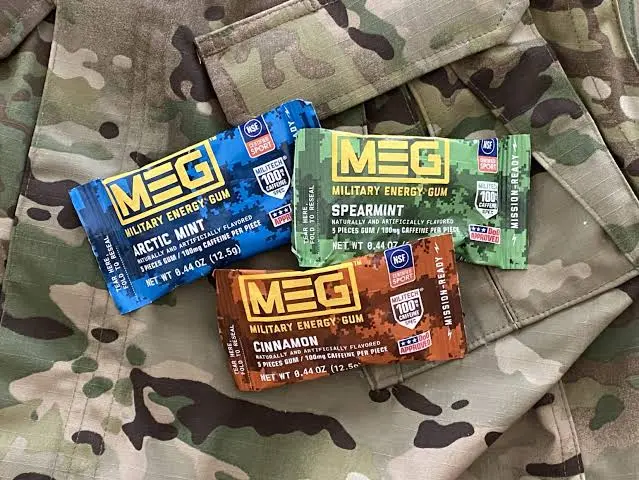
Caffeinated chewing gum has an unusual history. Unlike many functional foods that began as lifestyle products, caffeine gum was studied as a practical countermeasure for fatigue during military operations.
Its compact format offered an obvious operational advantage: no cup, can, water or preparation was required. Research then examined whether caffeine delivered through gum could help personnel maintain vigilance and physical performance during extended wakefulness.
Modern products expand on this concept with smaller caffeine servings, nootropic ingredients, sugar-free sweeteners and alternative gum bases. These eight factors explain what science and dental expertise can contribute to a responsible evaluation.
1. Military Research Supports Caffeine for Operational Alertness
Sleep deprivation can impair reaction time, attention, judgement and physical performance. These effects are especially relevant during prolonged military operations, where personnel may need to remain vigilant despite limited opportunities for sleep.
Controlled military studies have found that caffeine can help maintain vigilance and psychomotor performance during sleep deprivation.[1][2] Research involving Special Forces personnel also reported that caffeine helped preserve vigilance and improve running performance during an overnight field operation.[3]
These findings support caffeine as a temporary fatigue countermeasure. They do not mean caffeine replaces sleep or restores every function affected by sleep loss.
2. Gum Can Deliver Caffeine Differently From Capsules
Chewing releases caffeine into saliva, allowing some absorption through tissues in the mouth before the remainder is swallowed. Pharmacokinetic research has reported faster absorption from certain caffeine gums than from swallowed capsules.[4]
That speed may be useful when alertness is needed without waiting for a drink or capsule to move through the gastrointestinal system.
However, “faster” is not universal. Release and absorption depend on the gum matrix, caffeine amount, chewing duration and individual physiology. Findings from one gum cannot automatically validate a different commercial formulation.
3. Dose Control Is More Important Than Marketing
Military-style energy gum may contain a substantial amount of caffeine in each piece. Civilian products may use smaller amounts, allowing users to increase intake more gradually.
A high per-piece dose can be useful in narrowly defined situations, but it also reduces the margin for error. Someone who combines gum with coffee, tea, energy drinks, pre-workout supplements or caffeine-containing medication may consume more than intended.
The U.S. Food and Drug Administration has stated that up to 400 milligrams of caffeine per day is not generally associated with negative effects for most healthy adults. That is not a recommended target, and sensitivity varies considerably.
A responsible label should state the caffeine amount per piece, serving size, maximum daily intake and appropriate warnings.
4. Supporting Ingredients Require Separate Evaluation
Some modern caffeine gums include L-theanine, theobromine, Alpha-GPC, B vitamins or botanical extracts.
L-theanine has been studied alongside caffeine in controlled human trials. Some studies have reported improvements in specific measures of attention and task performance when the two were combined.[5][6]
Alpha-GPC supplies choline involved in acetylcholine synthesis, while Rhodiola rosea has been investigated in connection with stress and fatigue. Evidence varies according to dose, population and extract quality.
Consumers comparing a traditional high-caffeine gum with a broader functional formula can review this analysis of military caffeine gum. The comparison highlights differences in caffeine per piece, supporting ingredients, gum base and intended use.
Research on individual ingredients is not proof that a finished multi-ingredient product produces the same outcomes.
5. Sugar-Free Gum Has Dental Advantages Over Sugared Gum
From a dental perspective, the first question is whether a gum contains fermentable sugar. Oral bacteria can metabolise sucrose and other carbohydrates, producing acids that contribute to enamel demineralisation.
Sugar-free gum avoids supplying conventional sugar through the chewing product itself. Chewing also stimulates salivary flow. Stimulated saliva helps clear food debris, dilute acids and increase buffering capacity after meals.[7]
This creates a reasonable role for sugar-free gum within an oral-hygiene routine, particularly when brushing is temporarily unavailable. It remains an adjunct—not a replacement for brushing, interdental cleaning and professional dental care.
6. Xylitol May Offer Additional Oral-Care Value
Xylitol is a sugar alcohol used in many dental products. It is considered non-cariogenic because common cavity-associated bacteria do not readily ferment it into harmful acids.
Systematic reviews have evaluated xylitol-containing gum in relation to caries and Streptococcus mutans. Some findings are encouraging, but evidence quality and outcomes have varied.[8][9]
It is therefore reasonable to describe xylitol as a tooth-conscious sweetener with supporting research. It is not responsible to claim that every xylitol gum prevents cavities.
Consumers should also know that excessive sugar-alcohol intake may produce digestive discomfort. Xylitol is highly toxic to dogs, so gum must be stored securely away from pets.
7. Caffeine and Dry Mouth Deserve Attention
Military personnel, shift workers and endurance athletes may experience dry mouth because of dehydration, stress, mouth breathing, medication or environmental conditions.
Chewing gum can temporarily increase salivary flow, which may improve oral comfort. That does not prove that caffeine gum treats xerostomia. Caffeine may also affect individuals differently, and gum cannot replace appropriate hydration or professional evaluation of persistent dry mouth.
Chronic low salivary flow increases the risk of caries, erosion, oral discomfort and difficulty swallowing. Anyone experiencing ongoing dryness should consult a dentist or healthcare professional rather than relying on gum alone.
8. The Natural Gum Base and Product Testing Matter
The term “gum base” can cover various permitted food-grade materials. Many commercial gums use synthetic base components, while others use plant-derived materials such as chicle and natural tree resins.
A natural base is not automatically superior for alertness or dental health. Its advantage is primarily ingredient transparency and alignment with consumer preferences. Manufacturers should avoid portraying approved synthetic bases as inherently toxic without reliable evidence.
Independent testing is another important consideration. Military personnel, competitive athletes and safety-sensitive workers may prefer products evaluated for label accuracy, contaminants or substances prohibited in sport.
Certification does not prove that a product improves performance or is appropriate for every person. It provides evidence about specific manufacturing and testing standards.
The Science-Based Military Caffeine Gum Bottom Line
Military caffeine gum emerged from a genuine operational problem: maintaining alertness when sleep was limited and conventional beverages were impractical. Controlled research supports caffeine’s ability to preserve certain aspects of vigilance and performance during sleep deprivation.
Modern caffeine gums vary widely. Some provide a concentrated caffeine dose in a simple formula. Others use less caffeine per piece and add L-theanine, Alpha-GPC, botanicals or vitamins.
Dental considerations add another layer. A quality product should be sugar-free, disclose its sweeteners and provide a complete gum-base description. Xylitol and saliva stimulation may support an oral-care routine, but they do not transform caffeine gum into a dental treatment.
The best choice depends on the user’s caffeine tolerance, purpose, health status and need for dose control. Consumers should test products cautiously, track caffeine from every source and avoid using stimulants to disguise chronic sleep deprivation.
Children, pregnant or breastfeeding individuals, caffeine-sensitive people, and those taking medication or managing cardiovascular conditions should seek appropriate professional guidance before using caffeinated gum.
References
- Lieberman HR et al. “Effects of Caffeine, Sleep Loss and Stress on Cognitive Performance and Mood During U.S. Navy SEAL Training.” Psychopharmacology, 2002.
- McLellan TM et al. “Caffeine Maintains Vigilance and Marksmanship in Simulated Urban Operations With Sleep Deprivation.” Aviation, Space, and Environmental Medicine, 2005.
- McLellan TM et al. “Caffeine Maintains Vigilance and Improves Run Times During Night Operations for Special Forces.” Aviation, Space, and Environmental Medicine, 2005.
- Kamimori GH et al. “The Rate of Absorption and Relative Bioavailability of Caffeine Administered in Chewing Gum Versus Capsules.” International Journal of Pharmaceutics, 2002.
- Owen GN et al. “The Combined Effects of L-Theanine and Caffeine on Cognitive Performance and Mood.” Nutritional Neuroscience, 2008.
- Giesbrecht T et al. “The Combination of L-Theanine and Caffeine Improves Cognitive Performance.” Nutritional Neuroscience, 2010.
- Dodds MWJ. “The Oral Health Benefits of Chewing Gum.” Journal of the Irish Dental Association, 2012.
- Riley P et al. “Xylitol-Containing Products for Preventing Dental Caries in Children and Adults.” Cochrane Database of Systematic Reviews, 2015.
- Haque N et al. “Effect of Xylitol-Containing Sugar-Free Chewing Gum on Dental Caries: A Systematic Review and Meta-Analysis.” BMC Oral Health, 2021.
This article is for general educational purposes and is not medical, dental or occupational advice.
:::