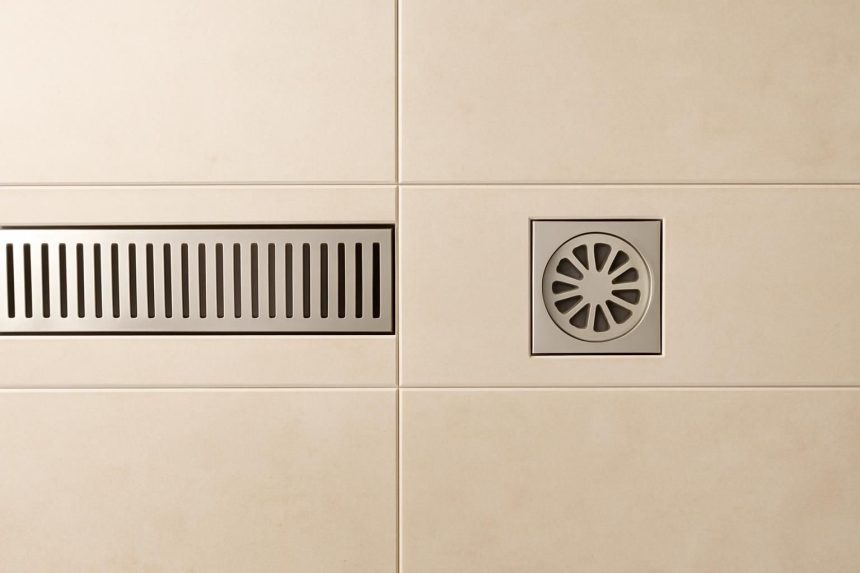
The floor drain is a small component with a huge responsibility. Every litre of shower water must flow into it quickly and safely, and its connection to the waterproofing is one of the most critical points in the entire bathroom. When renovating, homeowners usually choose between a traditional point drain and a modern linear drain. The choice affects the floor slope, the tile layout, accessibility and even how easy the bathroom is to clean. This guide compares the two options and explains what to consider.
Why the Drain Matters So Much
A bathroom floor is designed to lead water to the drain. If the drain is in the wrong place, too small or poorly connected to the waterproofing, water collects on the floor or finds its way into the structure. Many moisture problems in Finnish bathrooms start at the drain connection. Choosing the right drain and installing it correctly is therefore essential for a long-lasting wet room. The general principles of waterproofing apply here: the membrane must form a continuous, watertight layer that is tightly sealed to the drain.
Point Drains
A point drain is the classic square or round floor drain, usually placed in the middle of the shower area or the bathroom floor.
Advantages
- Familiar, proven technology with many product options
- Lower purchase price
- Easy to integrate in most floor structures
- Suitable for bathrooms where the whole floor drains to one point
Disadvantages
- The floor must slope from all directions towards the drain, creating an “envelope” shape
- Large tiles must be cut diagonally to follow the slope
- The drain is in the middle of the walking area
Linear Drains
A linear drain is a long, narrow channel placed along a wall or across the shower entrance. Water flows into it along its whole length.
Advantages
- The floor slopes in only one direction, which suits large-format tiles
- Clean, modern appearance with a discreet grille or tile insert
- Easier to create a level, step-free shower
- Efficient drainage of large water volumes, ideal for rain showers
- Comfortable to stand on, as the drain is out of the way
Disadvantages
- Higher product and installation cost
- Requires precise planning of the floor slope and tile layout
- The channel needs regular cleaning to remove hair and soap residue
Which Drain Is Right for You?
Choose a point drain if you are renovating on a tight budget, using smaller tiles or keeping a traditional layout where the whole floor drains to one point.
Choose a linear drain if you want large tiles, a walk-in shower with a glass wall, a step-free accessible design or a high-flow rain shower.
In apartment buildings, the position of the drain is often limited by the building’s drain pipes and floor structure. Moving the drain may require changes that affect the apartment below, so check the options with your contractor and housing company.
Accessibility Benefits
Linear drains make it easier to build a completely level shower floor, which is essential for wheelchair users and helpful for anyone with reduced mobility. The principles of universal design recommend step-free entrances and slip-resistant surfaces, and a well-planned linear drain supports both.
Installation Is the Key
Whatever drain you choose, the installation determines its success. The drain must:
- Be installed at the correct height in relation to the finished floor
- Be connected to the waterproofing with a tested clamping ring or factory-made sleeve
- Belong to a certified product system compatible with the waterproofing membrane
- Be accessible for cleaning and maintenance
Always ask the installer to photograph the drain connection before tiling as part of the renovation documentation.
Cleaning and Maintenance
Both drain types need regular care. Remove the grille or cover and clean out hair and debris every few weeks. Rinse the water trap and make sure it is reassembled correctly so that odours cannot escape. A well-maintained drain keeps water flowing and protects the waterproofing around it.
Plan the Drain Early
The drain type affects the floor slope, tile size and shower layout, so it must be decided at the very beginning of the renovation. An experienced renovation team can show you which options fit your bathroom. Homeowners planning a project can consult Kylpyhuoneremontti Vantaa specialists, who plan drains, slopes and waterproofing as one system.
Frequently Asked Questions
Can a point drain be replaced with a linear drain?
Yes, during a full renovation, but the floor screed and slopes must usually be rebuilt.
Does a linear drain smell more?
No, as long as the water trap is cleaned regularly and always contains water.
Conclusion
Point drains are affordable and proven, while linear drains offer modern design, easier tiling and better accessibility. The best choice depends on your layout, budget and tile plans. Whichever you choose, professional installation and a certified connection to the waterproofing are what keep your bathroom dry for decades.