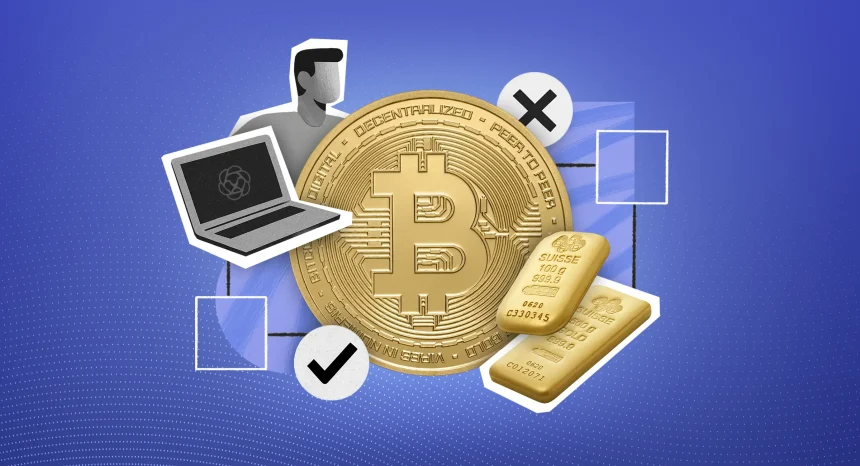
Investors have always faced the challenge of deciding when and how to sell their holdings. For centuries, gold was the ultimate store of value, while stocks have represented growth and ownership in companies. Today, digital assets add a new dimension to this landscape, and traders around the world are asking how to sell cryptocurrency in comparison with traditional investments. Understanding these differences is vital for making informed and profitable decisions.
Selling gold is historically tied to stability. The process is straightforward: an investor goes to a dealer or exchange, sells at the market rate, and receives cash. The value of gold rarely experiences sharp, unpredictable swings. For those familiar with precious metals, the question of selling is less about strategy and more about timing modest price cycles. In contrast, mastering how to sell cryptocurrency requires dealing with volatility that can shift prices dramatically within hours. A seller in the digital market must constantly monitor trends and be prepared to act quickly, something rarely necessary with gold.
Stocks present another comparison. Selling shares typically involves regulated exchanges with specific trading hours, brokerage intermediaries, and established settlement systems. Investors often follow company performance, quarterly reports, and economic indicators before deciding to sell. This structured environment reduces uncertainty and creates predictable processes. By contrast, the digital market never closes. Anyone exploring how to sell cryptocurrency must adapt to a 24/7 system where opportunities and risks arise at any moment, without the pauses and safeguards found in stock trading.
Liquidity also plays a role. Gold markets are global, but large transactions can sometimes require negotiation or specialized dealers. Stocks are highly liquid within established exchanges but limited to business hours. Cryptocurrency combines elements of both: high global liquidity and round-the-clock accessibility. And since selling often happens alongside the need to move funds, many traders also consider the most efficient ways to send crypto before completing a sale or transferring assets to another platform.
Costs differ significantly across these asset classes. Gold sales often involve premiums or dealer margins, and stock trades come with brokerage fees. In the digital market, transaction costs include exchange commissions, network fees, withdrawal charges, and sometimes hidden spreads. Calculating these expenses in advance is essential. A trade that looks profitable on the chart may deliver far less in reality, which is why accurate cost assessment is central to how to sell cryptocurrency.
Security adds another layer of contrast. Gold sales are usually conducted face-to-face, with physical verification. Stock sales rely on regulated systems that protect ownership rights. In cryptocurrency, responsibility falls heavily on the individual. Private keys, two-factor authentication, and secure wallets are all indispensable. Without them, assets can vanish instantly. For those trying to master how to sell cryptocurrency, security is not optional — it is the foundation of every decision.
Finally, taxation and regulation unify all three markets but with important differences. Gold and stocks are long-established assets, with clear frameworks for reporting and compliance. Digital assets remain in a state of flux, with rules varying from one jurisdiction to another and evolving rapidly. Sellers must adapt to local laws, often facing new reporting requirements or tax structures. For many, learning how to sell cryptocurrency responsibly means treating compliance as a core part of the process, just like timing or cost analysis.
The comparisons highlight one conclusion: selling digital assets is both more flexible and more complex than traditional markets. Gold emphasizes stability, stocks operate within structure, and cryptocurrency combines high liquidity with constant volatility. For modern traders, the challenge lies in using this flexibility wisely, avoiding the pitfalls of hidden costs, poor timing, or weak security.
Mastering how to sell crypto is about understanding these contrasts and building strategies that balance opportunity with discipline. Unlike gold or stocks, digital assets demand constant vigilance, but they also offer unparalleled access to global markets. For investors ready to adapt, selling cryptocurrency is not just another exit — it is a gateway to financial participation in the evolving digital economy.