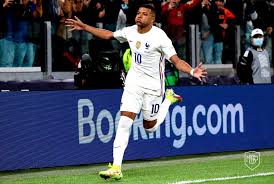
This France national team analysis provides a complete, structured evaluation of one of the world’s most talented and tactically advanced football squads. The French national team continues to demonstrate exceptional athleticism, depth, and adaptability across major tournaments, making them a consistent favorite in international competitions. To understand what drives their success — and where potential weaknesses may appear — this article examines tactical identity, squad characteristics, performance metrics, contextual influences, and predictive insights. Before diving into individual strengths, tactical setups, and match projections, it is essential to first revisit the foundational aspects that define France’s footballing identity.
Understanding the France National Team’s Football Identity
France’s national team identity is built on a blend of athletic superiority, technical precision, deep squad rotation options, and strategic adaptability. These qualities have become hallmarks of the French system across multiple coaching regimes. They allow France to impose their style on opponents, adjust to tactical challenges, and maintain consistency despite long seasons and tournament pressures. Understanding these broad characteristics will make later tactical analysis more meaningful.
Core Characteristics: Speed, Power, and Technical Precision
Modern French squads are known for their unique combination of physical and technical qualities. Speed allows France to dominate transitions and counterattacking sequences. Power gives them an advantage in duels, aerial battles, and compact defending. Technical precision enhances ball retention, progressive play, and controlled buildup. These traits often co-occur in key players, allowing France to play both vertically and positionally depending on match demands. These foundational strengths naturally influence the tactical systems the team implements.
Strategic Consistency Under Different Coaches
Despite coaching changes over the years, France has maintained a recognizable strategic DNA. Under some coaches, the team emphasized reactive transitions; under others, more structured possession appeared. A comparisonal evaluation shows that regardless of tactical adjustments, France retains consistent strategic pillars: strong defensive organization, vertical attacking efficiency, and balanced midfield roles. This consistency helps explain why their tactical systems remain effective across tournaments.
Tactical Systems France Frequently Utilizes
French tactical versatility is one of the nation’s competitive advantages. They can switch between dynamic formations depending on opponents, squad availability, and in-game momentum. Their systems incorporate pressing patterns, compact defending, and seamless transitions — components vital for top-level international performances.
Flexible 4-3-3 with High Vertical Threats
France commonly uses a 4-3-3, which provides width, stability, and strong central presence. Sequential execution typically begins with controlled buildup, progressing into wide overloads before triggering vertical runs from wingers or inside forwards. The shape also allows midfielders to rotate between support and progression roles. This formation suits France’s blend of fast attackers, technical midfielders, and a stable defensive line.
Transition-Focused 4-2-3-1
Another favored system is the 4-2-3-1, which emphasizes transitions and zone overloads. France uses this setup when aiming for controlled defensive phases followed by rapid forward surges. Semantic closeness terms — counter speed, directional passing, staggered positioning — capture how this shape dominates open-space scenarios. The double pivot ensures defensive balance, while the advanced midfielder acts as a bridge between lines. These systems lead naturally into the next focus: individual players who define France’s execution.
Key Players Defining the French National Team
Player quality remains the primary driver of France’s global competitiveness. The national squad consists of elite attackers, world-class midfielders, and disciplined defenders capable of executing complex tactical instructions. Recognizing these individuals — and understanding their influence — provides deeper clarity into France’s match outcomes.
Creative Engines and Attacking Leaders
France’s attacking identity relies heavily on creative players who deliver decisive contributions. Statistical evidence from key passes, dribbles, and expected assists (xA) shows their ability to destabilize opposition defenses. These players dictate pace, craft scoring opportunities, and influence high xG moments. Their presence elevates France’s attacking unpredictability and increases the team’s expected goal output in critical matches.
Defensive Anchors and Midfield Controllers
Defensive anchors ensure structural solidity, dictating tempo and organizing pressing triggers. A definitive explanation of their roles includes winning duels, initiating buildup, screening space, and controlling transitions. These midfielders and defenders prevent opponents from exploiting central channels and contribute significantly to PPDA reduction and zone control metrics. Their influence shapes France’s defensive stability and match rhythm, preparing the way for quantitative analysis.
Performance Metrics for Evaluating the France National Team
Performance metrics offer measurable insight into France’s tactical execution and overall consistency. Quantitative indicators such as expected goals, duel success, progression rates, and defensive pressing numbers reveal underlying strengths that results alone may not show.
Offensive Metrics: Shot Quality, Progressive Play, Chance Conversion
France excels in offensive metrics that reflect organized buildup and efficient finishing. Semantic clustering connects shot quality, progressive passes, and conversion rates as core indicators of attacking performance. Their progressive play is often supported by pace-driven movement and precise service from midfielders. High-quality shooting zones, central entries, and consistent xG patterns signal France’s ability to generate sustained scoring pressure.
Defensive Metrics: Duel Success, PPDA, Zone Control
Defensively, France maintains strong control through duel wins, effective pressing, and territorial dominance. Sequential logic explains how defensive phases unfold: disciplined shape, triggered pressure, controlled recoveries. Their PPDA often reflects well-balanced pressing intensity, while recovery maps show strong central defensive coverage. These defensive KPIs help predict match stability against both high-possession and counterattacking opponents.
Contextual Factors Affecting France’s Performance
While metrics and tactics provide a strong foundation, contextual variables heavily influence match outcomes. International competitions introduce unique challenges, including adaptation to opponent styles, travel, conditioning, and tournament pressure.
Match-State Adaptability and Momentum Shifts
France’s ability to adapt to evolving match states is a crucial advantage. Variable propositions reflect typical scenarios: if France scores early, they settle into compact control; if trailing, they increase pressing density and vertical risk. When matches remain level, France often relies on midfield rotation and long-range threats. This adaptability helps maintain competitive balance regardless of game context, enabling stronger prediction frameworks.
Predictive Framework for Future France National Team Matches
Building a predictive model requires synthesizing tactical, statistical, and contextual layers. By expanding evidence across these domains, analysts can forecast how France may perform against various opponents. This framework considers opponent style clashes, France’s expected pressing patterns, fatigue cycles, and projected xG outputs. Such synthesis provides clearer insight into match probability patterns and betting confidence.
Practical Betting Insights for France National Team Matches
Effective betting strategies on France involve identifying value trends, analyzing opponent weaknesses, and observing live match dynamics. Bettors should prioritize odds movement leading up to matches, consider France’s historical performance against specific tactical systems, and track lineup rotations. For readers seeking deeper match insights or an all-in-one sports entertainment platform, ufa168 เข้าสู่ระบบ offers additional football analysis and comprehensive betting options. Applying these structured principles enhances decision accuracy across France’s fixtures.
Final Summary and Strategic Takeaways
This France national team analysis outlined the squad’s identity, tactical versatility, key players, performance metrics, contextual factors, and practical betting insight. By using this structured framework, readers can better interpret France’s performance patterns, understand matchup implications, and make informed predictions. France’s blend of athletic power, tactical intelligence, and squad depth ensures they remain a major force in global football. Applying this analytical method to future matches will help maintain clarity and confidence when evaluating their competitive outlook.