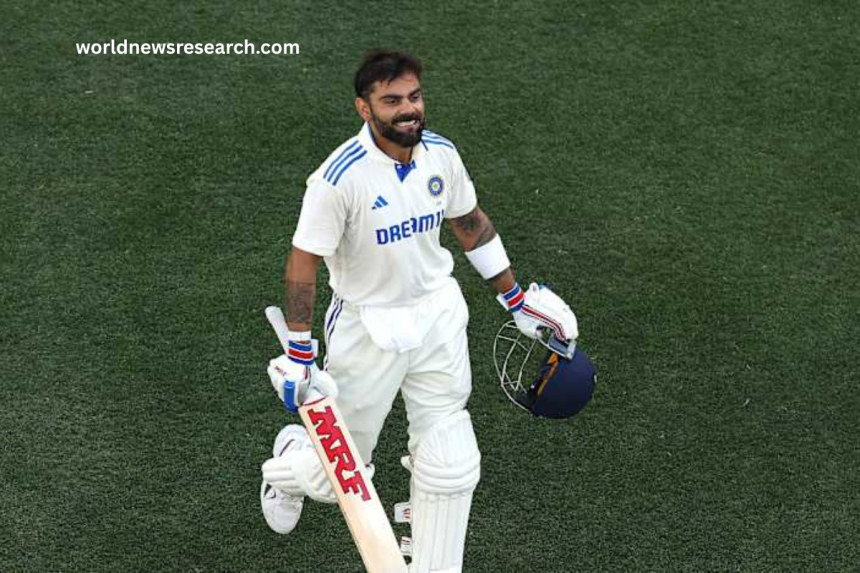
Virat Kohli, one of the most decorated cricketers of all time, has announced his decision to step away from Test cricket. This decision came as a surprise to many who had followed Kohli’s career, as he was the embodiment of passion, intensity, and commitment to the longest format of the game. His legacy in Test cricket is unparalleled, having achieved numerous records and milestones, and it is this same format that saw the world come to know and respect him as one of the game’s greats. However, his emotional departure marks the end of an era in Indian cricket. This article delves into the career of Virat Kohli, his love for Test cricket, the significance of his decision, and the impact it will have on the game.
Early Years – The Rise of a Test Cricketer
Virat Kohli’s journey into the realm of Test cricket began in 2011 when he made his debut against the West Indies. At the time, he was already recognized for his explosive performances in limited-overs formats, but Test cricket was a different beast altogether. It demanded patience, resilience, and mental fortitude—qualities that Kohli had yet to prove on the longest stage.
Kohli’s early years in Test cricket were not without challenges. His aggression, often associated with limited-overs cricket, had to be tempered. However, the transition was seamless. As he found his feet in the longer format, Kohli’s hunger to score runs and his aggressive approach to batting made him a standout. By the time he scored his first century in the 2012 series against Australia, Kohli had already showcased the potential to become a force to reckon with.
Kohli’s growth as a Test cricketer was steady but assured. His technique became more refined, his temperament evolved, and his ability to battle through difficult situations made him a formidable force in the longest format. As he grew in stature, so did his desire to lead the Indian cricket team, which eventually became a reality when he took over the captaincy in 2014.
Kohli’s Passion for Test Cricket
Test cricket is known for being grueling. It tests a player’s patience, skills, and mental toughness. Virat Kohli’s love for Test cricket was deeply ingrained in his approach to the game. Despite the shorter formats offering instant gratification and fame, Kohli’s focus remained on Test cricket.
Kohli himself has often referred to Test cricket as the ultimate challenge, where a batsman’s ability to play the long game is truly tested. In a sport where mental strength is as important as physical prowess, Kohli thrived in the intense atmosphere of Test cricket. Whether it was battling the swinging ball on seaming pitches in England, handling the turning tracks of the subcontinent, or facing the fiery fast bowlers in Australia, Kohli never shied away from the challenge.
His love for Test cricket was evident in his approach to fitness and preparation. Kohli was a pioneer in revolutionizing the fitness culture within the Indian team. His commitment to maintaining peak physical form allowed him to endure the long days in the field and the rigors of batting for hours. His mental resolve was as strong as his physical preparation, which made him an inspiration to aspiring cricketers.
The Captaincy Era – Kohli’s Influence on Indian Test Cricket
When Kohli took over the reins of the Indian Test team from MS Dhoni in 2014, Indian cricket underwent a transformation. Under his leadership, India became a force to be reckoned with in Test cricket. Kohli’s aggression was not limited to his batting; it extended to his captaincy as well. His assertive leadership style, bold decisions, and intense on-field persona gave India an edge that had been previously lacking in Test cricket.
One of Kohli’s greatest achievements as captain was his ability to inspire his teammates. He led by example, setting high standards for fitness, discipline, and performance. Under his leadership, India achieved the number one ranking in Test cricket for the first time in history, a feat that Kohli took immense pride in. He led India to historic series wins in Australia (2018-19), Sri Lanka, and West Indies, all of which added to his legacy as one of India’s greatest-ever Test captains.
However, Kohli’s leadership wasn’t just about winning matches—it was about changing the culture of Indian Test cricket. He brought a fierce, never-say-die attitude to the team, and his aggressive mindset was reflected in his players. The likes of Cheteshwar Pujara, Ajinkya Rahane, Ravichandran Ashwin, and Jasprit Bumrah blossomed under his leadership, while younger players such as Shubman Gill and Rishabh Pant found their footing in Test cricket.
The Journey of a Test Batting Maestro
Kohli’s achievements in Test cricket are extraordinary. He has consistently been among the top run-scorers in the format, and his records have placed him alongside the game’s greatest batsmen. Kohli’s ability to adapt to different conditions and deliver match-winning performances is unparalleled.
Over the years, Kohli has amassed runs in every corner of the world—whether it was the bouncy pitches of Australia, the seaming conditions in England, or the dusty tracks in India. His centuries against Australia, particularly the 2014-15 series in Australia, and his countless innings in India, speak volumes about his ability to adapt and conquer different challenges.
What set Kohli apart was not just his ability to score runs but his mental approach to the game. Kohli was known for his ability to switch gears in different situations. Whether his team was under pressure or cruising along, Kohli was often the calming influence or the one to lead from the front. His cricketing intellect and ability to read the game gave him a competitive edge.
Perhaps his most iconic Test innings came during the 2018-19 series in Australia, where Kohli faced a fierce attack from the likes of Mitchell Starc, Josh Hazlewood, and Pat Cummins. He not only survived but dominated, showing the world his sheer grit, determination, and skill.
Kohli’s approach to Test cricket went beyond just technical excellence. His passion for the game was unmatched, and it was evident in his on-field presence. His celebrations, his exchanges with opposition players, and his body language all reflected his unrelenting desire to succeed in the toughest format.
The Emotional Farewell
When Kohli announced that his body, mind, heart, and spirit no longer allowed him to continue playing Test cricket at the level he demanded of himself, it was a statement that resonated deeply with fans and the cricketing world. Test cricket had been his passion, his pride, and the format that shaped him into the player he became. The decision to walk away, on his terms, was an emotional one.
Kohli’s farewell note, in which he expressed his gratitude and deep love for Test cricket, spoke volumes about his respect for the game and its significance in his life. He talked about the “quiet grind, the long days, the small moments that no one sees but that stay with you forever.” For Kohli, Test cricket was not just about runs and centuries; it was about the spirit of the game, the dedication, and the mental strength required to excel.
It was clear that father time had caught up with Kohli, but it was not just age that led to this decision. The mental and physical toll of playing international cricket at the highest level, year after year, had begun to take its toll. Kohli, always one to demand the best from himself, knew that he could no longer deliver the performances that had once defined him.
The Legacy and Impact
Kohli’s legacy in Test cricket will live on for generations. He redefined what it meant to be a modern Test cricketer, bringing passion, intensity, and unmatched skill to the format. His contribution to Indian cricket, particularly in the Test arena, is monumental. Kohli’s departure leaves a void that will be difficult to fill, but it also paves the way for the next generation of Indian cricketers to carry the mantle forward.
The influence of Virat Kohli on Indian Test cricket is undeniable. He set new standards in fitness, leadership, and performance, and his passion for the game will continue to inspire future cricketers. As the world reflects on Kohli’s extraordinary career, it is clear that he has left an indelible mark on the history of Test cricket, one that will be remembered for years to come.
Frequently Asked Question
Why did Virat Kohli retire from Test cricket?
Virat Kohli retired from Test cricket because he felt that his body, mind, heart, and spirit were no longer able to meet the high standards he set for himself in the format.
How has Kohli’s departure impacted Indian cricket?
Kohli’s retirement marks the end of an era for Indian cricket. His leadership and contributions were crucial in India’s rise to the top of world Test cricket, and his absence will create a leadership gap but also an opportunity for others to step up.
What is Virat Kohli’s legacy in Test cricket?
Kohli’s legacy is defined by his passion, skill, and resilience. He led India to the number one Test ranking and consistently performed in challenging conditions, inspiring future cricketers with his commitment to fitness and mental toughness.
Why was Kohli so successful in Test cricket?
Kohli’s success was due to his mental strength, technique, and adaptability to different conditions. His fitness and focus allowed him to thrive in the longest format of the game.
Will Kohli continue playing limited-overs formats?
As of now, Kohli has only retired from Test cricket. There’s no confirmation on his future in ODIs or T20s, but it’s likely he will continue in these formats for some time.
How did Kohli’s leadership shape Indian Test cricket?
Kohli’s leadership brought aggression, fitness, and a winning mentality, leading India to historic series wins and the number one Test ranking. His high standards inspired the team to achieve greatness.
Conclusion
Virat Kohli’s farewell to Test cricket closes a remarkable chapter in the game’s history. His leadership and exceptional batting skills reshaped Indian cricket, inspiring a generation of players. While his retirement leaves a void, his legacy in Test cricket is undeniable, and future generations will continue to be motivated by his commitment to the sport.