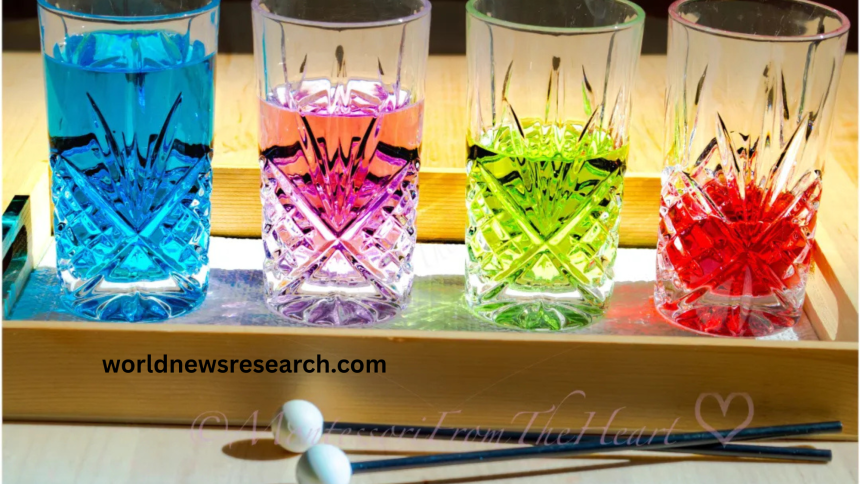
Mixing water and wine might seem like a simple activity. On the surface, it involves combining two liquids that blend naturally and easily. However, when viewed through the lens of mathematics, the act of mixing wine and water becomes a fascinating and challenging puzzle. It calls for an understanding of balance, proportion, and logical reasoning.
In this exploration, we will unravel the mathematical principles behind mixing water and wine to achieve the perfect balance. Whether you’re an avid puzzle solver, a math lover, or someone who simply enjoys thinking in new ways, this journey offers an engaging and thoughtful experience.
What Does Mixing Really Mean?
At its core, mixing means combining substances so that their individual properties interact and transform. When wine is mixed with water, the alcohol concentration is diluted. What was once pure becomes blended, and its properties change.
Mathematically, this change is not random. It follows rules governed by proportions. These proportions determine how much of each component is present in the mixture and how the properties of the original liquids affect the final result.
The Language of Proportion
One of the key concepts in this puzzle is proportion. Proportions allow us to compare different quantities and understand the relationship between them. In the case of wine and water, proportion helps us determine the amount of wine relative to water in a mixture.
For example, if we begin with only wine and start adding water, we gradually reduce the wine’s influence on the overall mixture. Each additional part of water shifts the balance until the mixture reaches a new equilibrium.
Understanding proportion helps us predict and control the outcome of the mixture, especially when the goal is to achieve a specific balance between the two liquids.
Concentration: The Hidden Variable
Another essential concept is concentration. Concentration refers to how much of one substance is present within a mixture. In this case, we are particularly interested in how much alcohol remains after mixing wine with water.
When wine is mixed with water, the concentration of alcohol drops. The more water is added, the lower the concentration becomes. This idea forms the core of many water and wine puzzles: figuring out how the concentration changes when the liquids are combined in various ways.
By understanding how concentration works, we can begin to model and solve these kinds of puzzles with clarity and confidence.
Classic Puzzle Scenarios
The water and wine puzzle has appeared in many variations throughout history. These versions usually involve removing a portion of wine from a container and replacing it with water. This process is repeated, leading to a series of changes in concentration.
Other versions involve blending different mixtures of wine and water, trying to achieve a final solution that matches a desired balance. These puzzles often rely on creative reasoning and a solid grasp of mathematical concepts like ratios and equivalence.
Even though the puzzles may seem straightforward, they often hide surprising outcomes and require a careful approach to find the correct answer.
A Step-by-Step Thought Process
To solve a wine and water mixing puzzle effectively, it helps to follow a structured thought process.
First, consider what you know. This includes the starting condition of the wine, the actions taken (like removal or replacement), and the goal of the puzzle.
Next, define what you’re trying to find. This could be the final concentration of alcohol, the volume of wine left in a container, or the correct amount of water to add for a desired effect.
Then, express the relationships between the components. Think of how each change affects the balance between water and wine.
Finally, test your conclusions. Check whether your solution makes logical sense and fits the puzzle’s conditions.
Using this kind of reasoning not only helps with wine and water puzzles, but also improves general problem-solving skills.
Visualizing the Process
Sometimes, thinking visually can make a complex problem easier to understand. Imagine two clear containers: one with wine, and another with water. As you transfer liquid between them, the clarity of your visualization can help you grasp how the concentration changes.
Each exchange changes the composition of both containers. With every step, wine is replaced with water, but a portion of wine ends up in the water container too. These changes build upon one another, often in ways that seem subtle but lead to a significant shift over time.
By visualizing the process clearly, you can anticipate the effect of each step and better understand the underlying math.
The Algebra Behind the Puzzle
Algebra plays a powerful role in unraveling wine and water problems. It allows us to assign values to unknowns and set up expressions that describe how the mixture behaves.
Through substitution, simplification, and solving, algebra provides a precise framework for finding the solution. Even without specific numbers, you can work with variables to model a problem and reveal patterns that aren’t visible through intuition alone.
This approach not only makes the puzzle solvable but also highlights the elegance of mathematical thinking.
Beyond Puzzles: Real-World Applications
The wine and water puzzle is more than a brain teaser. It represents real-world problems in various fields, including chemistry, biology, and food science.
In chemical labs, for example, solutions must be diluted or concentrated precisely. Beverage companies blend different liquids to meet exact flavor and strength profiles. Even in cooking, balancing ingredients can involve the same principles found in this puzzle.
Understanding how proportions and concentrations work equips us to make more informed decisions in many everyday contexts.
Deeper Challenges and Variations
As with most mathematical ideas, the puzzle can be extended into more advanced territory. Consider scenarios where the mixing continues over and over, or where multiple types of wine are used. These changes add complexity and challenge, pushing the problem beyond simple logic into deeper mathematical theory.
Some versions even invite probability into the mix, especially when the liquids are stirred randomly or sampled without full knowledge of their contents. In such cases, solving the puzzle might involve assumptions, estimates, or averages.
These variations demonstrate the adaptability of the original problem and how it can evolve into new forms for further exploration.
What This Puzzle Teaches Us
At a glance, mixing water and wine might not seem like a lesson in problem-solving. But hidden in its simplicity is a profound opportunity to learn about patterns, logic, and structured thinking.
The puzzle teaches us to ask better questions, make clearer observations, and test our assumptions. It shows how math isn’t just about numbers; it’s about understanding how things work, predicting outcomes, and solving challenges through clear reasoning.
These are skills that extend far beyond the confines of puzzles and can be applied to many aspects of life.
Final Thoughts: The Beauty of Balance
The water and wine puzzle is more than an exercise in mathematics. It’s a metaphor for balance, precision, and thoughtful action. Like any good puzzle, it offers both challenge and clarity — a chance to explore the boundaries of what we know and push ourselves toward deeper understanding.
By studying how to mix water and wine perfectly, we not only learn about mathematical relationships but also gain insight into how small changes create big effects. And in doing so, we appreciate the quiet beauty of logic at work in the world around us.
Frequently Asked Questions
What is the wine and water mixing puzzle about?
The puzzle explores what happens when you mix wine and water in a container, often involving transfers or replacements, and challenges you to calculate the resulting mixture’s concentration or balance.
Is this puzzle based on real-world principles?
Yes, it uses real concepts such as dilution, concentration, and proportional reasoning, which apply to chemistry, cooking, and beverage production.
Do I need advanced math to solve it?
Not at all. While algebra helps, many versions of the puzzle can be solved with basic reasoning and an understanding of ratios and proportions.
Why does the result often seem surprising?
The outcome can feel unintuitive because of how replacement and dilution interact. Even small steps can lead to unexpected shifts in balance, especially when repeated.
Can this be visualized to make it easier?
Yes. Many people find it helpful to imagine containers, transfers, and the changing levels of wine and water. Visual aids can make the math more intuitive.
What skills does solving this puzzle help develop?
It sharpens logical reasoning, pattern recognition, and problem-solving—valuable skills in academics and everyday life.
Are there different versions of the puzzle?
Absolutely. Some involve repeated mixing steps, others use more than two containers or different liquid types. These variations increase complexity and add depth to the challenge.
Conclusion
The wine and water mixing puzzle offers a fascinating window into how logic and mathematics explain the world around us. Though the setup may seem simple, the depth of thinking required reveals just how elegant and surprising everyday problems can be.