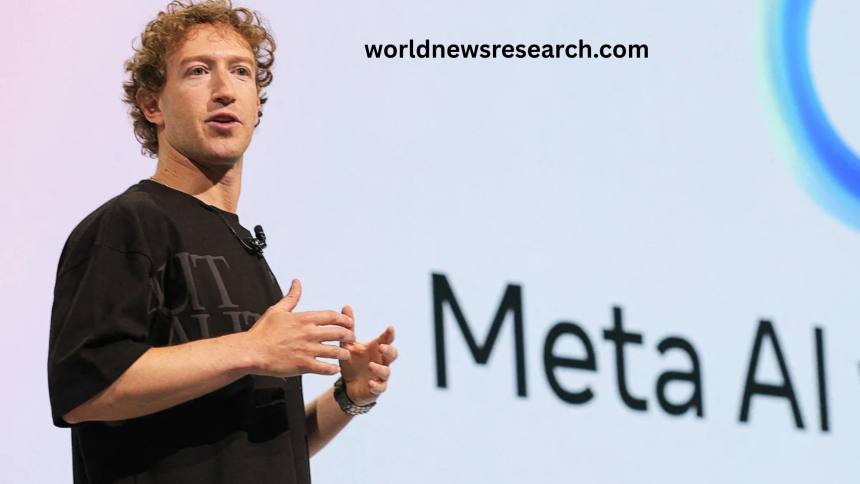
In a bold and controversial move, Meta Platforms Inc., the parent company behind Facebook, Instagram, Threads, and WhatsApp, has embarked on a transformative overhaul of its content moderation framework. At the heart of this shift lies a renewed emphasis on protecting freedom of expression, minimizing censorship, and empowering users rather than institutions to guide public discourse.
This pivot comes after years of heated debates over whether social media platforms have grown too powerful as arbiters of truth and fairness, and whether their content rules have disproportionately silenced certain viewpoints. Meta’s new policies, framed as a campaign for digital free speech, have dramatically reduced the number of posts removed from its platforms, leading to praise, criticism, and intense scrutiny.
The Road to Reform: A Reaction to Growing Discontent
Meta’s decision did not emerge in a vacuum. Over the years, the company found itself at the center of political, social, and legal firestorms concerning its role in moderating speech. Content moderation algorithms, designed to detect and remove offensive or false material, often faced backlash for flagging satirical, controversial, or politically sensitive content that many argued did not truly violate community standards.
This discontent grew in scope and intensity as users across the ideological spectrum expressed concerns. Conservatives often alleged political bias and suppression, while progressive voices sometimes accused the company of inconsistency and insufficient action against hate speech and harassment. Governments around the world debated how to regulate the platform without infringing on speech rights or interfering with domestic laws.
Against this backdrop, Meta’s leadership began reevaluating the company’s long-term content governance strategy. Insiders suggest that this reevaluation included extensive consultation with legal experts, free speech advocates, civil society groups, and even critics of the platform.
Dismantling the Old Guard: Ending the Fact-Checking Partnership
One of the most significant changes in Meta’s policy was its decision to end the company’s collaboration with third-party fact-checking organizations. These fact-checkers, many of them affiliated with international media watchdogs and journalism institutes, were once tasked with flagging misleading or false claims shared on the platform.
While initially lauded as a necessary check on viral misinformation, the fact-checking system eventually drew intense criticism. Detractors pointed out that it lacked transparency and consistency. Some claimed that the fact-checkers operated with ideological bias or failed to account for nuance and evolving information. In politically charged contexts, even nuanced opinions were sometimes labeled as misinformation, leading to reduced visibility or takedowns.
Meta replaced this system with a new community-driven model, inspired by user-powered moderation mechanisms seen on other platforms. Known internally as “Community Notes,” the system allows users to collaboratively annotate posts with added context. Rather than banning or downgrading content outright, the platform now favors surfacing multiple viewpoints and leaving it to users to assess credibility.
A Strategic Shift: Loosening Content Policies
Meta also undertook a comprehensive rewrite of its content moderation guidelines. The new rules aim to reduce ambiguity and offer clearer thresholds for enforcement. Topics previously deemed too sensitive — such as immigration, gender identity, vaccine hesitancy, and election commentary — are now treated with greater leniency.
This does not mean that harmful or dangerous content is now allowed, but rather that Meta is attempting to separate “harmful” from “controversial.” The goal is to allow more room for expression while still enforcing boundaries around incitement to violence, direct threats, or illegal activities.
Critics of the earlier system had long argued that platforms tended to lump together harmful and controversial content, removing posts that were provocative but not inherently dangerous. The updated guidelines are Meta’s attempt to draw these distinctions more carefully and intentionally.
Refocusing on High-Severity Violations
Rather than spreading its moderation resources across a vast and vague landscape of potential policy breaches, Meta has chosen to zero in on the most serious forms of abuse. These include child exploitation, hate-fueled violence, organized terrorism, and egregious harassment.
This refocus allows moderation teams to work with sharper precision, investing their efforts where harm is most imminent and measurable. By deprioritizing low-level violations such as slang, satire, or contentious political rhetoric, the company seeks to align its practices more closely with democratic ideals.
Importantly, while the volume of overall content takedowns has dropped, enforcement against truly dangerous material has not only remained steady but in some areas intensified. This strategic calibration underscores Meta’s effort to show that loosening moderation does not equate to abandoning responsibility.
Political Geography: A Move from Silicon Valley to Texas
In a move that raised eyebrows and sparked discussion, Meta shifted many of its moderation and policy operations away from its traditional stronghold in Silicon Valley to Texas. Executives described the relocation as an attempt to decentralize decision-making and reduce the cultural and political insularity of its staff.
The shift also serves as a symbolic departure from the dominant progressive ethos of the West Coast tech scene, signaling Meta’s desire to reimagine itself as more politically neutral and geographically diverse. Texas, with its regulatory environment more aligned with free speech absolutism, became a natural home for this next phase.
Some analysts speculate that this move was also influenced by potential state-level regulatory pressures and incentives, though Meta has not confirmed any such motivations publicly.
Tangible Impacts: Fewer Takedowns, Broader Discourse
The most noticeable result of Meta’s policy overhaul has been a dramatic reduction in the number of posts removed from its platforms. This decline spans a range of content types — from political commentary and user rants to memes and satire.
Internally, the company has expressed confidence in this new trajectory, arguing that fewer takedowns reflect greater consistency and restraint in enforcement. The guiding philosophy is that robust public discourse, even when messy, is preferable to top-down censorship.
At the same time, platform data indicates that exposure to overt hate speech has not increased in proportion to relaxed moderation rules. This suggests that empowering users to flag, annotate, and discuss content may be more effective than blanket bans in deterring offensive behavior.
User Growth and Engagement Metrics
Interestingly, these changes have coincided with an uptick in user engagement and a modest rise in the number of active users across Meta’s family of platforms. While correlation is not causation, some observers argue that reduced moderation has rekindled interest among users who previously felt unwelcome or censored.
The platform has also seen more diverse content emerge in conversations, including posts from activists, educators, and commentators who previously hesitated to participate fully due to fears of algorithmic suppression or shadow bans.
That said, Meta’s leadership remains cautious. They recognize that long-term trust is earned through consistent behavior, and that the true test of these reforms will come in times of crisis — such as elections, major geopolitical events, or public health emergencies.
Global Reactions and Regulatory Attention
Reactions to Meta’s shift have varied wildly across the globe. In some countries, free speech advocates have praised the changes as a long-overdue course correction. Others, including human rights groups, have sounded alarms about the potential spread of hate speech, disinformation, and extremist content.
International regulators, particularly in Europe and parts of Asia, have expressed concern that Meta’s looser policies might violate local laws on hate speech, harmful misinformation, or data privacy. The challenge for Meta going forward will be how to maintain a globally unified philosophy on speech while respecting the sovereignty of individual nations.
Legal scholars have pointed out that this tension is unlikely to be resolved by companies alone. A more robust international framework may be necessary to balance digital rights with civic responsibilities across borders.
Critics Push Back
Unsurprisingly, the reforms have drawn substantial criticism. Advocacy groups, academics, and some civil society coalitions argue that Meta’s emphasis on free speech could come at the cost of user safety and informational integrity. They worry that the pendulum has swung too far in favor of expression, leaving vulnerable groups exposed to abuse.
Others claim that the removal of professional fact-checking has opened the door for conspiracy theories and manipulated narratives. While the community notes system is promising in theory, it remains untested at scale and vulnerable to coordinated manipulation if not carefully managed.
Some lawmakers have already floated proposals to enforce transparency measures and accountability mechanisms that would compel platforms to reveal more about their moderation decisions, community dynamics, and algorithmic influences.
Meta’s Defense: Building a “Public Square”
In defending its new policies, Meta has framed the changes as part of a long-term vision to build a modern public square — a space where diverse voices, ideas, and arguments can coexist without fear of censorship or distortion.
Executives insist that democracy cannot thrive unless people are allowed to speak freely, even when their ideas are unpopular, imperfect, or uncomfortable. The alternative, they argue, is an opaque moderation system that arbitrarily silences speech and concentrates power in the hands of a few gatekeepers.
This vision is not without its challenges. Ensuring that freedom of speech does not descend into a free-for-all of toxicity, harassment, or manipulation will require constant vigilance, sophisticated tools, and genuine community involvement.
The Future of Digital Expression
Meta’s new chapter is emblematic of a larger philosophical battle unfolding across the internet. What role should tech companies play in regulating speech? How do we protect users without silencing them? Can moderation be both fair and scalable?
These questions do not have easy answers. But Meta’s decision to embrace a more open model of discourse — while still targeting severe harms — may offer one blueprint for reconciling freedom with responsibility.
As society continues to wrestle with these issues, platforms like Meta will likely remain both battlefield and laboratory. Whether this grand experiment succeeds
Frequently Asked Questions
Why did Meta change its content moderation policies?
Meta shifted its content moderation strategy to place a greater emphasis on free expression. The company responded to criticism that its previous approach was overly restrictive, inconsistent, and biased, particularly on politically sensitive topics. This policy change aims to promote a more open dialogue while still addressing high-severity content violations.
What is the ‘Community Notes’ system, and how does it work?
The Community Notes system is a user-driven method of adding context to posts. Instead of removing content flagged as misleading, Meta allows users to contribute annotations that offer additional perspectives or clarifications. This aims to empower the public to make informed decisions, rather than relying solely on third-party fact-checkers.
What types of content are still removed under the new policy?
Meta continues to enforce strict moderation against content that is considered highly dangerous or illegal. This includes material promoting hate-based violence, child exploitation, terrorism, and targeted harassment. These categories remain high priorities for removal or demotion in visibility.
Did Meta eliminate all fact-checking?
Meta ended its partnerships with third-party fact-checking organizations. While it no longer relies on external agencies to assess content, it has shifted toward a community-based model. The company believes this model increases transparency and minimizes institutional bias, although its effectiveness is still being evaluated.
Is hate speech now allowed on Meta platforms?
No, hate speech is still prohibited. What has changed is the threshold for determining what qualifies as hate speech and how it’s handled. Meta reports that its updated policies are designed to allow controversial viewpoints without enabling targeted abuse. Early data suggests hate speech visibility has decreased, even as overall moderation efforts have become more selective.
Why did Meta move some operations to Texas?
Meta relocated part of its content moderation and policy teams to Texas to diversify its organizational culture and reduce the influence of a single geographic or ideological perspective. The company also cited Texas’s more supportive regulatory environment for free expression as a factor in the decision.
Has user engagement changed since the policy update?
Early indications suggest an increase in platform engagement and user satisfaction. The broader range of permissible content may have contributed to users feeling more comfortable expressing themselves. However, Meta continues to monitor trends to ensure that engagement does not come at the cost of safety or information quality.
How has the international community responded to these changes?
Reactions have been mixed. Free speech advocates have praised Meta’s shift, while some governments and rights organizations have raised concerns about the potential spread of misinformation and hate speech. The challenge for Meta is balancing a global commitment to free expression with compliance to local regulations.
Conclusion
Meta’s decision to reframe its content moderation strategy marks one of the most significant shifts in the company’s approach to online speech in recent history. By moving away from aggressive takedown practices and placing greater trust in user judgment, Meta is seeking to redefine what responsible platform governance looks like in a democratic society.